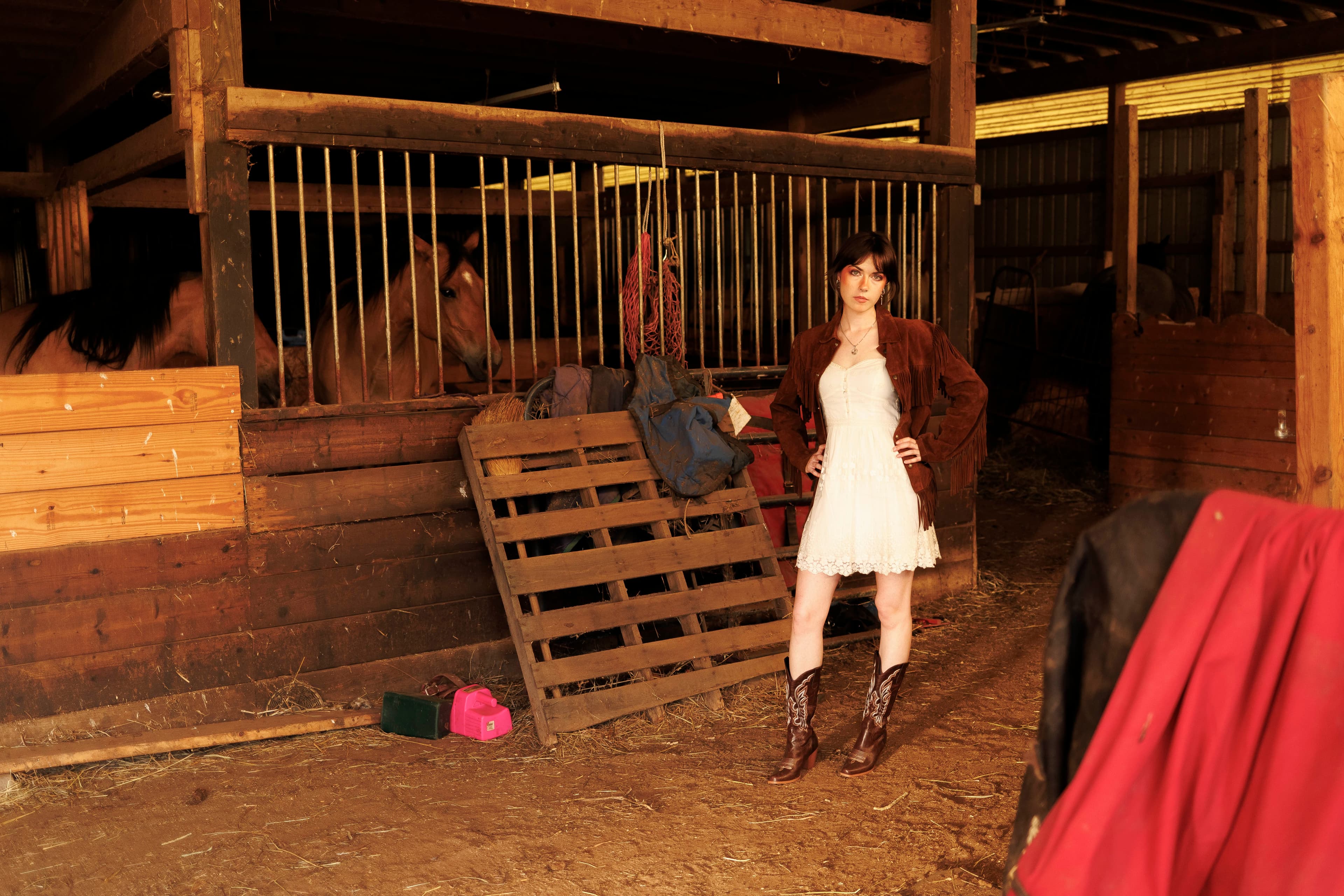


Alcohol is engrained in my family culture. Gatherings are flowing with booze; I stay close and take my Aunt Sara’s advice on what drinks to try. One of my few COVID lockdown outings would be to ride shotgun in my father’s F-150 while he drove us to whichever craft brewery had the best pickup options. I would snap pictures with my DSLR while he spouted facts about the building we passed or the song that played, sharing his own sprawling history in the region.
My great-great-grandma bootlegged during Prohibition. “They did what they had to do,” he told me.
Alcohol production was an act of necessity for many across the sprawling hills of this region and further Appalachia. But what happens when alcohol production goes from an act of survival to a form of craft?
My father grew up a short walk from the site of the Battle of Bower Hill, where farmers revolted against federal tax inspector Brigadier General John Neville over whiskey excise tax. He had used this as inspiration for developing his own operation, but there is a high cost to distilling at a large scale. My mom encouraged him to take a distilling class at Point Park where he met ICD Master Distiller, Matt Strickland. As the 10-week experience ended, my father confirmed everything he knew at this class: damn, does he love distilling! A dream had finally surfaced, but he started to get anxious… “What if it’s too late?”
It’s only getting later, Eddie.

My mom pushed him out of the nest of comfort and familial responsibility he beheld himself to. He promptly started as a tour guide at the distillery, working up to a full-time distiller by October and absorbing everything he could from Matt Strickland.
Strickland was brought to Pittsburgh by Iron City Brewing CEO Cliff Forrest for what he originally thought was a consultation on building out a distillery on the Iron City campus in Creighton, the site of the first PPG factory from 1883. A North Hills local, Forrest had bought the site and created a state-of-the-art brewing facility after dousing the coal fires under the property. Now, he was looking to expand into whiskey. Before long, Strickland was named Master Distiller, building an entire operation from the ground up.
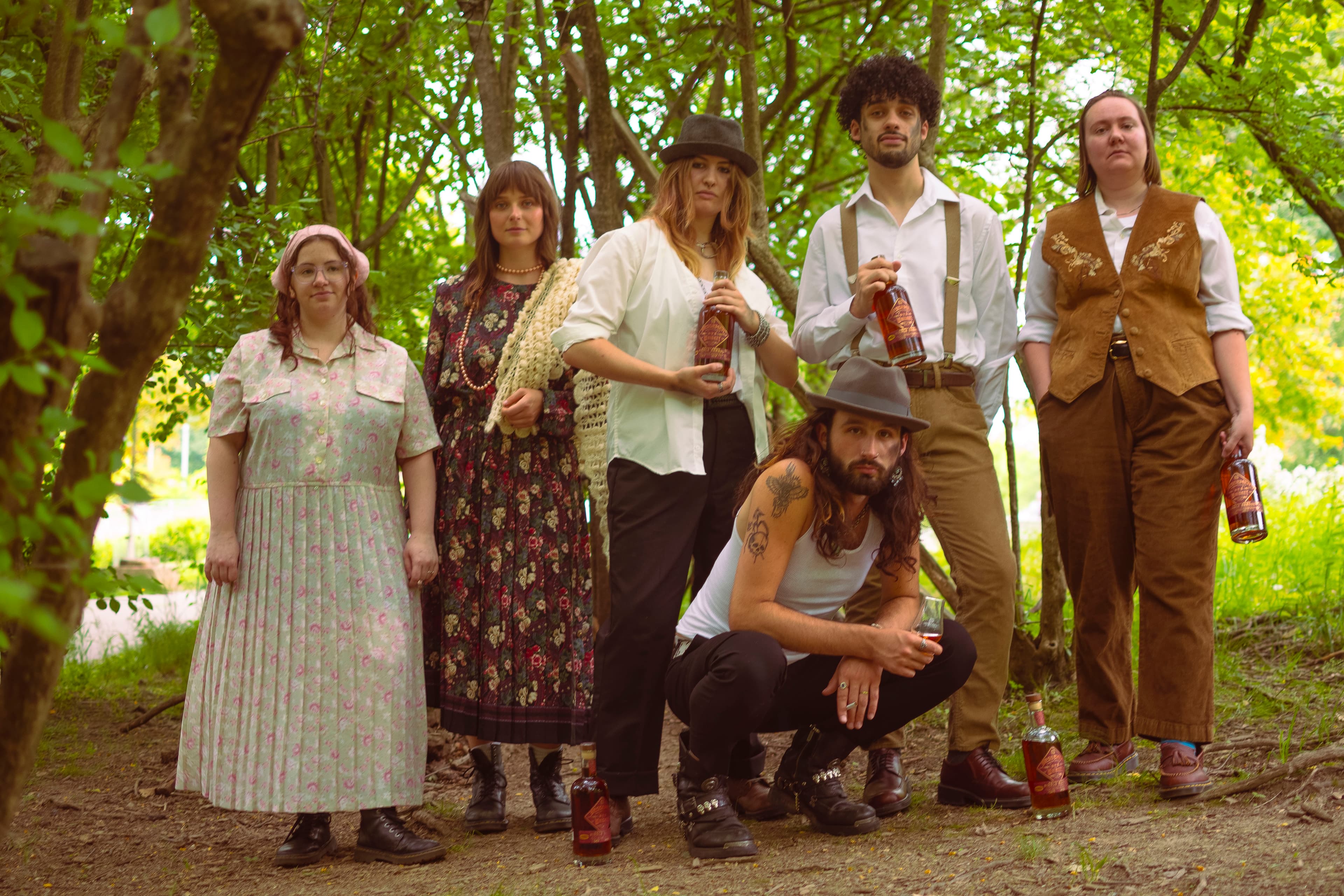
With the story of the Whiskey Rebellion already being told by other producers, Strickland delved into the history of Western PA for inspiration. 100% rye grain whiskey recipes stuck out to him. The golden age of rye spanned from the 1850s up to Prohibition in the 1920s, with production concentrated in Western Pennsylvania. 100% rye maintains more of the grain’s “character,” making these whiskey recipes bold and full of flavor.
Since 2024, Strickland and his team have been stocking thousands of barrels of 100% rye whiskey in preparation for release under the name, “Bessemer.” Named after Sir Henry Bessemer, the inventor of a process that made steel production cheaper and more efficient, the commercial brand for ICD’s products wants to remind us of history in a bottle.
ICD President Peter Katz is a homegrown Yinzer who kept getting recommended when Forrest was looking for the head of his new Iron City Brewing offshoot. It’s clear Katz is respected in the hospitality industry. Having worked in various capacities, most notably in alcohol distribution, he too thought he was being brought in as a consultant and not a figurehead. When he got clarity on the offer and tasted the whiskey, Katz quit his other job in the coming weeks.
“My father’s always been big into history, genealogy… the companies that have been here, they would move away and that was disappointing in some ways. To know that you could be part of preserving a company is pretty special.”
— Peter Katz
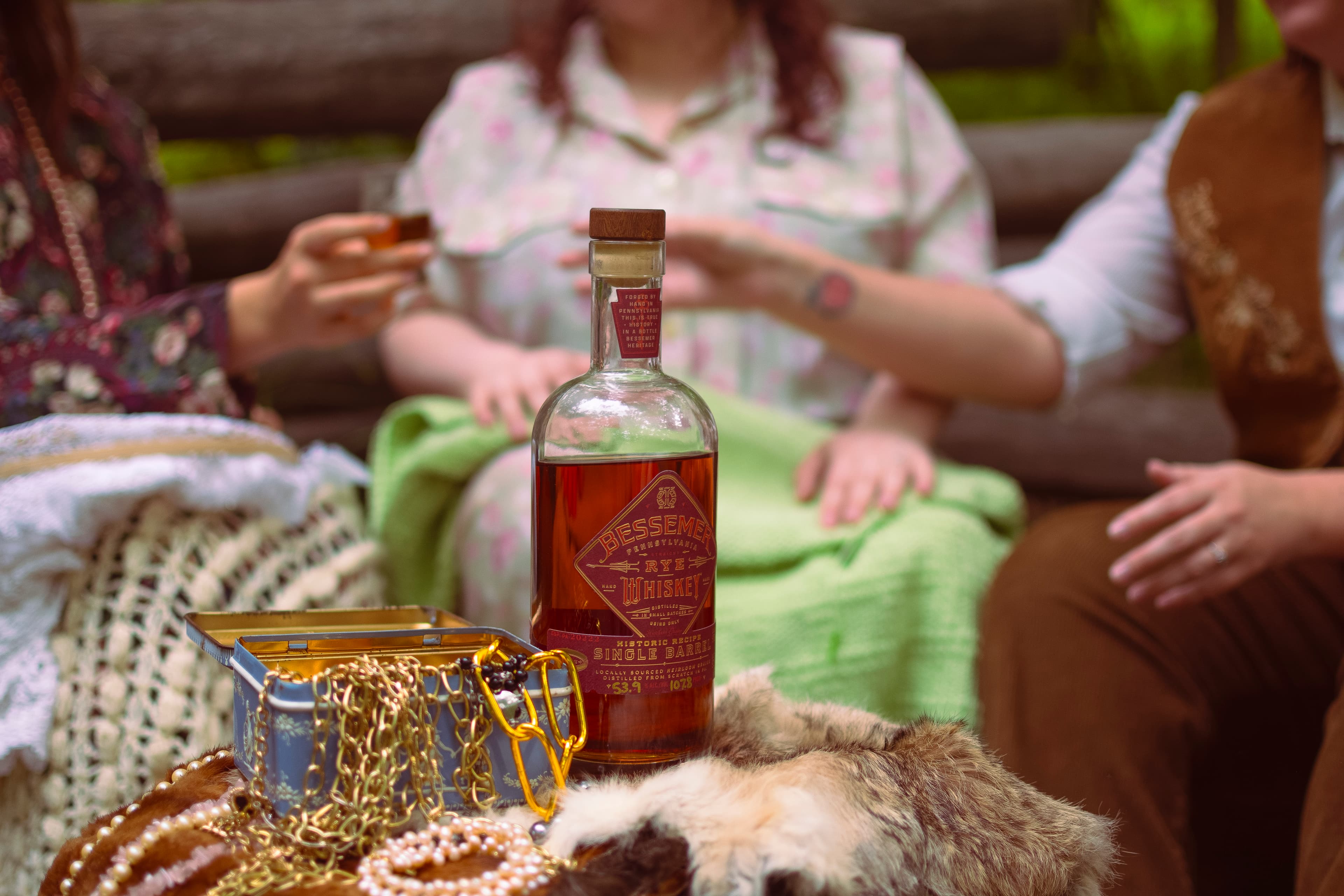
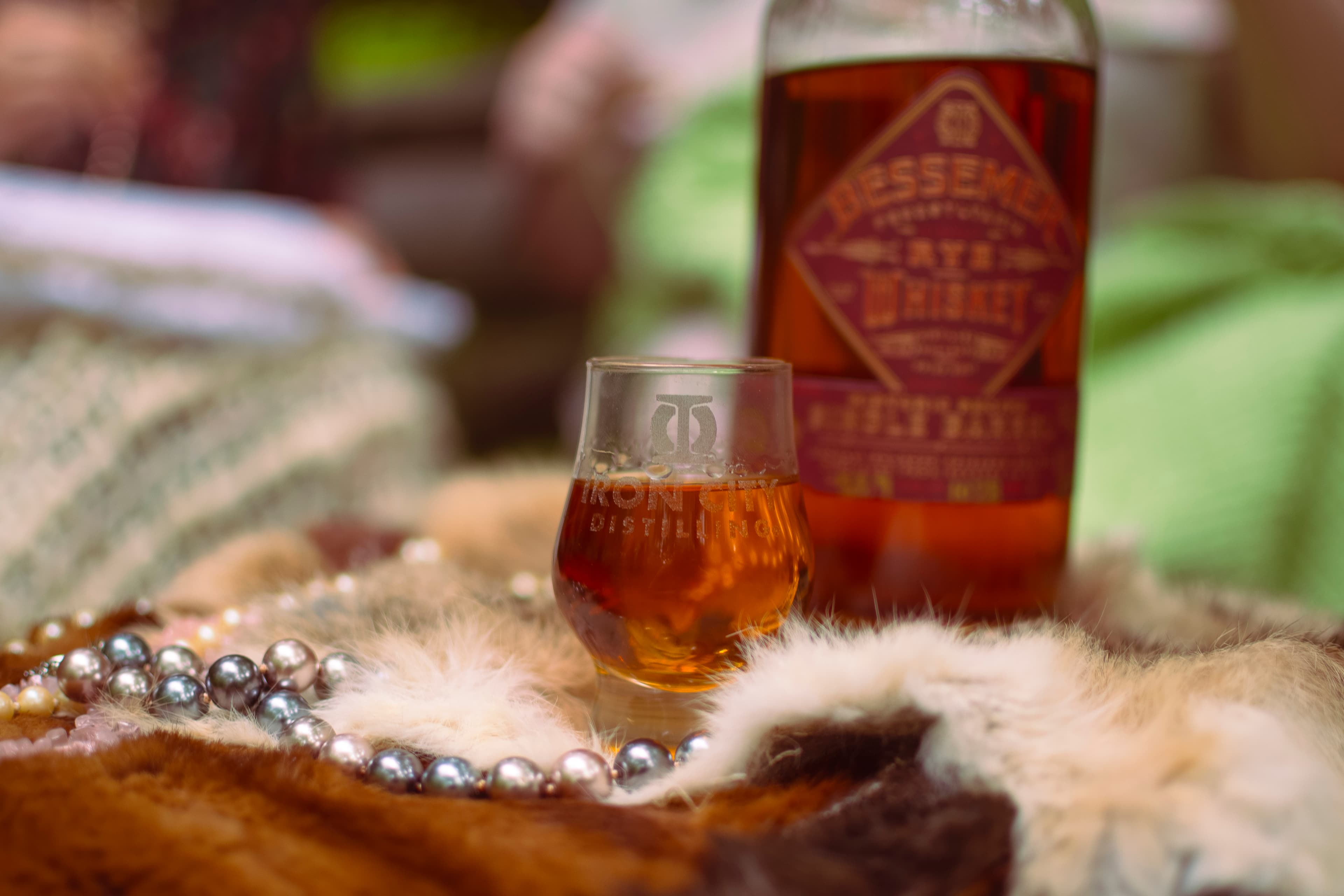
The distillers have hand-picked single barrels to release in small batches while they wait for more barrels to mature enough for ideal consumption. Current estimates have the team slated for a more widespread distribution in October. For now, you can find the rye along with their gin at the Iron City campus and some local bars. Each barrel release has different subtleties in flavor. Barrel 586, the one I received a bottle from, starts off with a strong, oaky taste and moves into the rye grass flavor as the alcohol evaporates, settling with “spice cabinet” notes. It’s a strong whiskey to drink straight, but compared to your normal bar pour, the taste is complex and relatively smooth.
Every detail is accounted for in the look and feel of the product as well. The bottle features labels with keystone state motifs, rich color and decorative industrial text. Looking through the liquid from the front reveals an image on the adhesive side of the back label. This whiskey is intentionally designed from grain to glass.
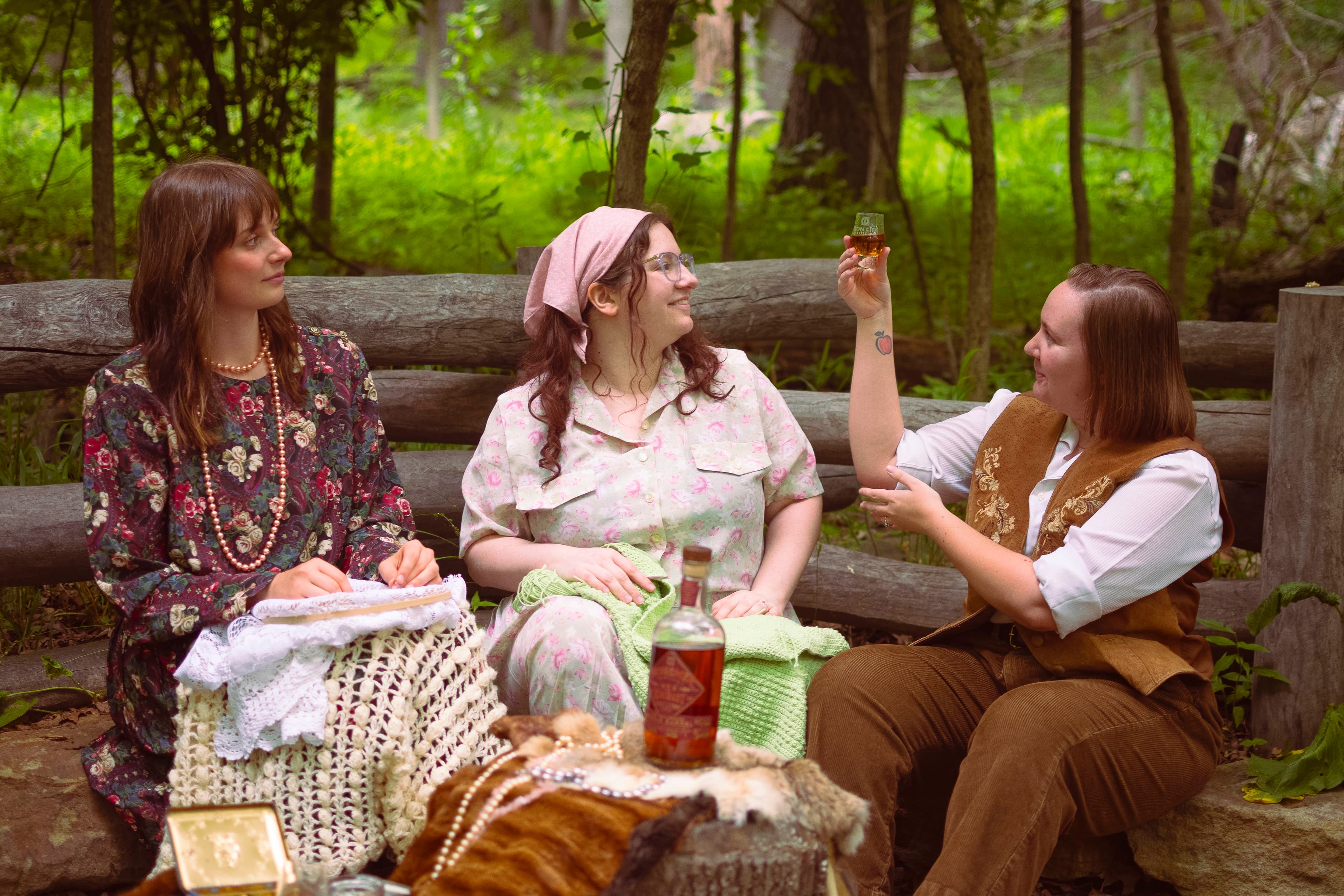
“Apple makes the package so nice you don’t want to throw it away, even though you might never use it. [To me,] our bottle is like that. It’s gonna be a decanter, a centerpiece, a conversation starter.”
— Peter Katz
A large part of Strickland’s ethos involves education. During “Whiskey Wednesdays,” the distillers get together and taste different samples as a form of team—and taste—building. Strickland also brought an open-book policy to the distillery, which differs from Iron City Brewing’s operations involving proprietary information. With three books and a plethora of articles with his byline, Strickland sees no need to keep secrets.
“If there was any trick of the trade that I had, it’s out there by me. If somebody came in here and said, ‘I want to know what your gin recipe is,’ my guys are instructed to tell them down to the smallest detail how to make it. When I first started out, I didn’t know what the hell I was doing… and I wish that somebody would have let me come in and hang out and ask questions.”
— Matt Strickland

That energy is felt. Entering the distillery on a tour comes with a warmth. The industrial spiral staircase and leather couches turn a warehouse with stills, fermentation chambers, and tubes into an experience that feels authentically Pittsburgh. Events are regularly hosted in the bar area upstairs, from “Music on the Mezz” to tasting events where the team pairs spirits to foods. Every person who works there showcases an authentic pride in what they are doing, and they should.
In an age where cutting bottom lines becomes so normalized that we make up buzzwords like “shrinkflation,” ICD prides themselves on being “gloriously inefficient for unforgettable whiskey.” It turns out that, sometimes, things are inefficient for a reason. Strickland requested a steam-controlled warehouse for the barrels to mature in, while most distilleries let the barrels shrink and expand throughout the year to avoid paying for climate control. ICD gets their grain from local Pennsylvania farms and purposely chose the Danko variety despite its higher cost. Even though accountants normally frown on putting in more money than necessary, Strickland and Katz have seen their requests be honored.

“Every way we check our boxes is more expensive than other options. Our owner says, ‘If we’re gonna do it we’re gonna do it right,’ where most owners would push back.”
— Peter Katz
Strickland also pushed for unique equipment, the most impressive being their triple-chamber still. Being the third in the world in operation, this still is as close as one can get to producing rye whiskey like it’s 1850.
“One of the most innovative things that you can do is look backwards in order to go forward. A lot of the large firms love to convince you that everything that could be done with whiskey has already been done. We have just barely scratched the surface, I believe, in what's possible for flavor and experiences… Before we had even distilled a drop, we were ordering an expansion worth seven figures… Everybody wanted to see this whiskey come to fruition.”
— Matt Strickland
In accordance with their ethos, I asked Strickland to break down the distilling process from start to finish in easy steps, and he obliged.
STEP 1: ENZYME BREAKDOWN
Rye grains contain complex sugars, which need to be broken down so we can convert them into alcohol. The grains are heated and mixed with water and enzymes to break them into simpler fermentable sugars.
STEP 2: FERMENTATION
Once the grain’s sugars are accessible, yeast is added. Yeast feeds on the grain sugars and produces alcohol. Once the yeast activity starts to slow down, you technically have the start of a beer, called mash. But we aren’t done here…
STEP 3: DISTILLATION
The mash is transferred to the still and heated until the alcohol evaporates, eventually condensing out the other side. The distillers must separate the “heads” and “tails” of the run, which hold the more harmful byproducts from the process. This leaves behind the “hearts.”
STEP 4: BARRELLING
Whiskey needs to age, so the liquid being distilled today has a while to go before it gets to you. The first whiskey made on the tri-chamber still won’t be available until 2027!
STEP 5: BOTTLING
Once the product has been sufficiently aged, the distillers label and fill the bottles, taking painstaking care to ensure product consistency.
If they worked the stills 24/7, ICD would produce 140 barrels a week, which is considered a relatively small operation. What they lack in production scope, they make up for in depth. The intensive care put into this product shows, and it is well worth the price tag.
It’s back-breaking labor, but Eddie has never been happier than when he’s working those stills.