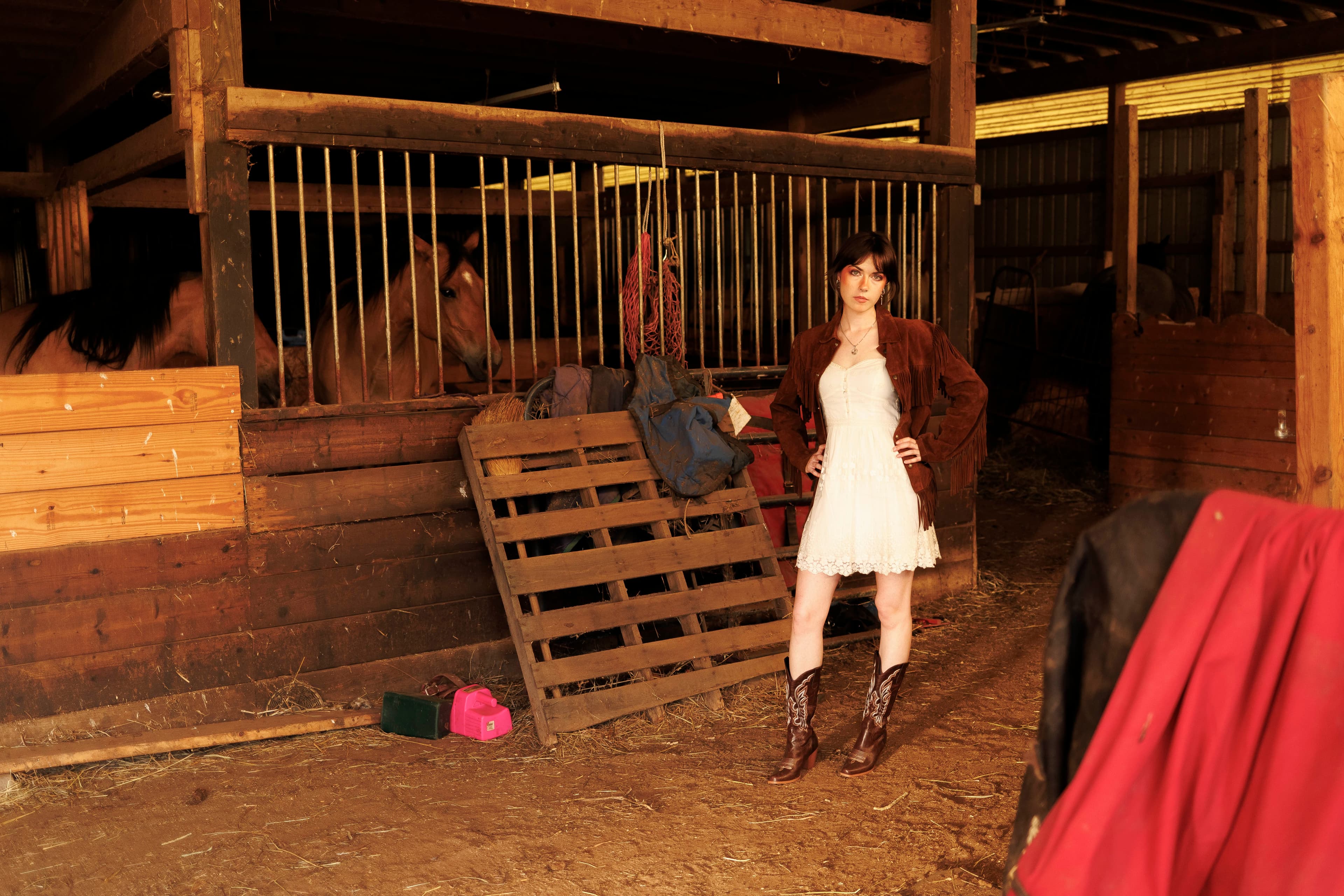

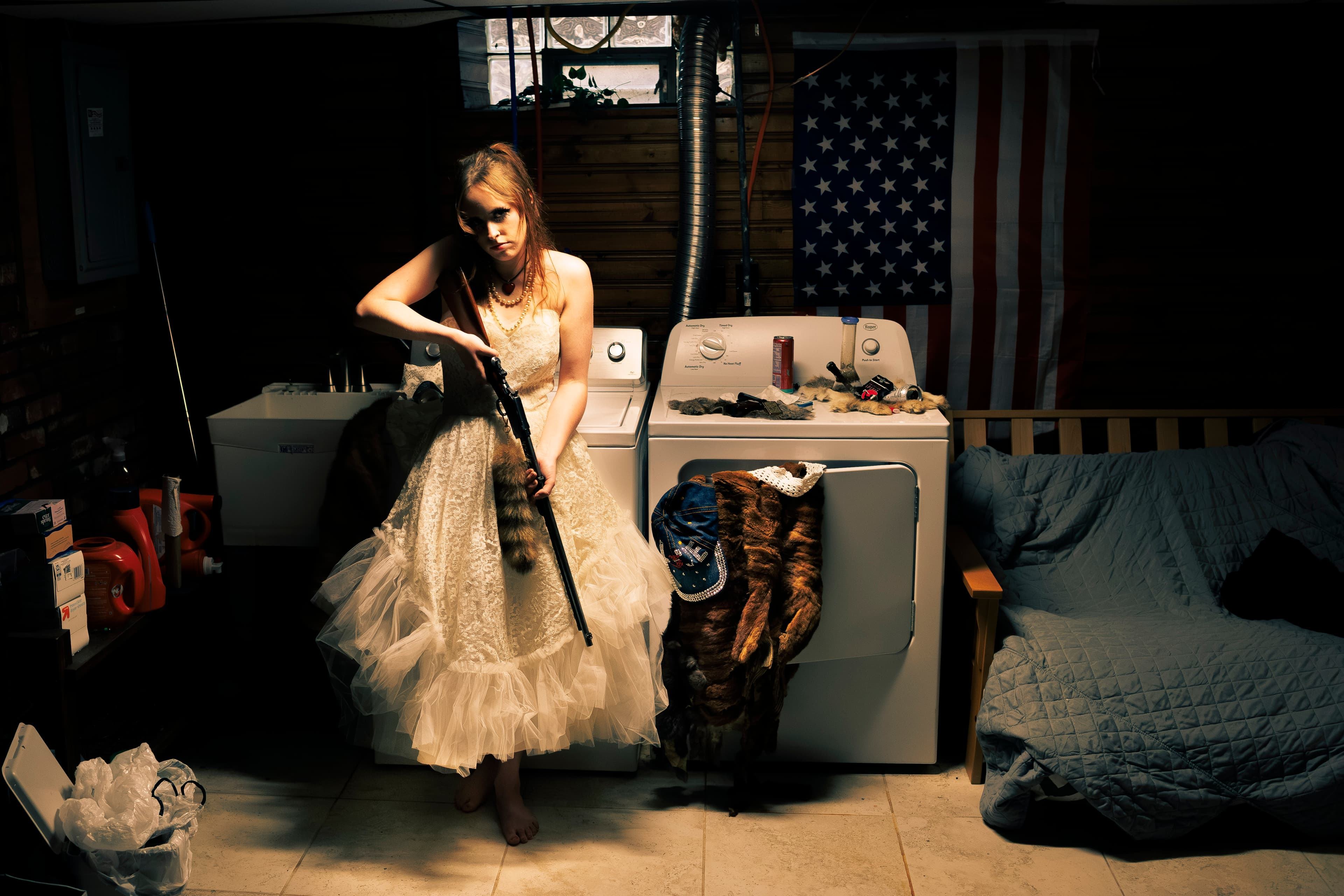
I’ve been seeing brides everywhere, sad-eyed and willowy like pale ghosts on the edges of my vision. Zendaya, behind a silvery veil in The Drama. Sabrina Carpenter, with a cigarette between her pursed lips. Sydney Sweeney, sobbing and dripping hot, red blood onto her Wiederhoeft gown.
It’s difficult to ignore the timing here. In 2024, the U.S. recorded its lowest birth rate in history, with only 1.6 births reported per woman. Vice President JD Vance has gone so far as to declare this below-replacement rate a “civilizational crisis.” A declining birth rate, however, has long been considered a sign of societal advancement. Historically, low birth rates go hand-in-hand with expanded access to contraceptives, education, and healthcare.

The birth rate isn’t the problem, and I don’t think Vance believes it to be either. The problem is that women are increasingly rejecting the expectations that perpetuate men’s claim over our bodies. With wider personal and financial freedom, women began choosing themselves over wifehood and motherhood. Men can no longer get away with being mediocre, because women can and will stay single before marrying someone below their standards. That scares a lot of mediocre men—some of whom happen to be in office.
Every day, women’s autonomy is increasingly encroached upon by the government. The SAVE Act, currently being debated in the Senate, will increase voter registration requirements using language legal experts warn could make it harder for married women to vote. Many states have passed or are in the process of passing near-total abortion bans, while the Supreme Court is reviewing country-wide access to abortion medication.
And if they can’t up the birth rate through policy, you can bet they’ll try to do it through pop culture.

Besides the seemingly endless procession of brides this spring, the past few years have seen the rise of the “trad wife” influencer. A term originally from Reddit and 4chan forums, “trad wives” are women who embrace “traditional” gender roles within their family unit. Specifically, influencers Nara Smith and Hannah Neeleman (Ballerina Farm) have faced backlash for promoting this lifestyle to young women and girls. Both young Mormon mothers, critics view their cooking and homemaking content as thinly-veiled propaganda.
But Smith and Neeleman aren’t really “trad wives.” They each own and operate highly successful brands, and any mother will point out the problem with Smith’s homemade cereal recipes: the twenty-four-year-old isn’t interrupted every thirty seconds by her four children, because she can afford to pay for nannies.

This is where it’s important to draw a distinction in the fight for women’s autonomy. We were never fighting for the right to work. Women have always worked. By the 1830s, women already made up 40% of the manufacturing labor force in the Northeast United States. If we weren’t on the assembly lines, we were mothers who spent all day cleaning, cooking, learning, teaching — all real work, all without pay, and all whether we liked it or not.
Still, I’m witnessing a concerning trend of Gen-Z women yearning for an imagined, patriarchal past (a Tweet reading “I can’t believe women fought to work” echoes in my memory). Though I’d love to ditch a lifetime of labor to bake cookies and weave flowers into my children’s hair, that isn’t reality. Wifehood and motherhood is hard, expensive, work. It's a constant sacrifice. There’s a reason people say “it takes a village,” and the nuclear family has reduced that village to one. Two, if you’re lucky.

Women have never fought for labor. We’ve labored for as long as we have existed. But all women, whether we are stay-at-home moms or rocket scientists, must fight every day for our labor’s recognition and fair compensation. I just hope that, even as the world grows scarier and more confusing, we won’t make the mistake of diminishing ourselves, retreating back into the cave for fear of what’s casting those bride-like shadows.